
Introduction
Working in Jebel Ali Free Zone can be highly rewarding, but only if you clearly understand the laws that protect your job, income, and visa. JAFZA Labour Laws and Regulations 2026 define how employment works inside the free zone — from contracts and working hours to termination, gratuity, and dispute resolution. Yet many employees and even employers remain confused, assuming JAFZA follows “separate” or “private” rules.
In reality, JAFZA operates under UAE federal labour law while managing its own administrative processes. This distinction is critical. Knowing your legal rights under JAFZA Labour Laws and Regulations helps you avoid unpaid dues, unlawful termination, visa complications, and costly disputes. Whether you are an employee, HR professional, or business owner, this guide is designed to give you clear, updated, and practical knowledge so you can make confident, legally sound decisions in 2026 and beyond.
Table of Contents
What Are JAFZA Labour Laws and Regulations?
Meaning and Legal Framework
JAFZA Labour Laws and Regulations are the legal rules that govern employment relationships inside Jebel Ali Free Zone. These rules are not separate or private laws. They are based on UAE Federal Decree-Law No. 33 of 2021, which is the official labour law of the UAE and remains applicable in 2026 unless formally amended by the government.
The key difference is enforcement. In mainland UAE, labour matters are handled through MOHRE. In JAFZA, the same federal law is applied through JAFZA’s own administrative authority. This means employment contracts, working hours, termination, gratuity, and disputes follow federal law standards but are processed within the JAFZA system.
Authoritative sources confirming this framework include the UAE Ministry of Human Resources and Emiratisation (MOHRE) and the official JAFZA authority, which both clarify that free zones implement federal labour law through their internal procedures. Understanding this structure helps you know where your rights come from and which authority protects them, reducing confusion and legal risk.
Understanding the Applicability of JAFZA Labour Laws
When it comes to JAFZA Labour Laws and Regulations, it’s important to know who they apply to. These laws are designed to govern the relationship between employees and companies within JAFZA. The goal is to clarify who is covered under these laws, ensuring both employees and companies understand their rights and responsibilities from the very beginning.
Who Is Covered
JAFZA Labour Laws and Regulations apply to all employees sponsored by a JAFZA-registered company. This includes permanent staff, fixed-term contract employees, and most company-sponsored contractors. If a company controls your working hours, pays your salary, and issues your visa, the law protects you, regardless of job title or nationality.
Independent consultants who are not sponsored by the company usually fall outside direct labour protection. However, if a consultant works like a regular employee in practice, legal coverage may still apply. This principle is consistent with guidance published by MOHRE and JAFZA, where substance matters more than labels.
Employer’s Responsibilities
Employers operating in JAFZA must fully comply with JAFZA Labour Laws and Regulations for companies. This includes issuing legally compliant contracts, paying wages on time, respecting working hour limits, and following proper termination procedures. HR teams are responsible for maintaining records, including contract classifications and ensuring compliance with notice periods and end-of-service gratuity. For detailed guidance on calculating gratuity under JAFZA in 2025 to understand the key regulations and ensure compliance.
HR teams are responsible for record-keeping, contract registration, and compliance with notice period and end-of-service rules. Failure to meet these obligations can result in fines, lisence suspension, or labour disputes handled by the JAFZA labour dispute department. Compliance is not just a legal duty; it is a business safeguard that protects reputation and operational continuity.
Employment Contracts Under JAFZA

Employment contracts sit at the heart of JAFZA Labour Laws and Regulations. Every working relationship must be documented, registered, and legally valid. A contract is not just paperwork; it defines your salary, role, notice period, and legal protection. Most disputes in JAFZA start because contracts are unclear or poorly understood.
JAFZA follows the UAE’s contract-based employment system, meaning all terms must align with federal labour law standards. Once approved by JAFZA, the contract becomes legally binding on both parties, and neither side can change terms without proper consent.
Limited (Fixed-Term) Contracts
Limited contracts are issued for a specific duration, usually up to three years. These contracts automatically expire unless renewed by mutual agreement. They clearly define job responsibilities, salary structure, and contract length, which reduces ambiguity for both sides.
Under JAFZA Labour Laws and Regulations, employees on limited contracts enjoy the same rights as permanent staff. This includes entitlement to notice, end-of-service benefits, and protection against unlawful termination. Ending a fixed-term contract early without valid reason may lead to compensation claims.
Unlimited Contracts
Unlimited contracts continue until either the employer or employee ends the relationship with proper notice. These contracts offer flexibility but require stronger justification if terminated by the employer. Poor documentation is one of the most common causes of disputes in JAFZA labour laws employee termination cases.
For employees, unlimited contracts provide stability and continuous benefits. For employers, they demand careful performance records and fair procedures. When managed correctly, unlimited contracts create long-term trust and reduce legal exposure for both parties.
Working Hours, Breaks, and Overtime

Standard Work Hours
Under JAFZA Labour Laws and Regulations work hours, employees generally work up to 48 hours per week, eight hours per day. Some sectors have approved extended hours of 55 or 57, depending on operational needs.
Breaks and Overtime
Mandatory breaks must be provided during shifts, and overtime is payable when work exceeds standard limits. Weekly rest days are non-negotiable. Employers must document all hours to comply with the law and avoid disputes.
Employee Rights and Employer Duties
Core Rights for Employees
Employees are entitled to safe working conditions, timely salaries, and protection against unfair treatment. They cannot be dismissed without valid reasons, and any disciplinary action must follow due process. Understanding these rights ensures you can assert them confidently.
Employer Obligations
Employers must maintain accurate HR records, provide fair treatment, and comply with all labour regulations. Clear internal policies aligned with JAFZA Labour Laws and Regulations policy reduce the risk of disputes and protect the company legally.
Termination of Employment
Lawful Termination
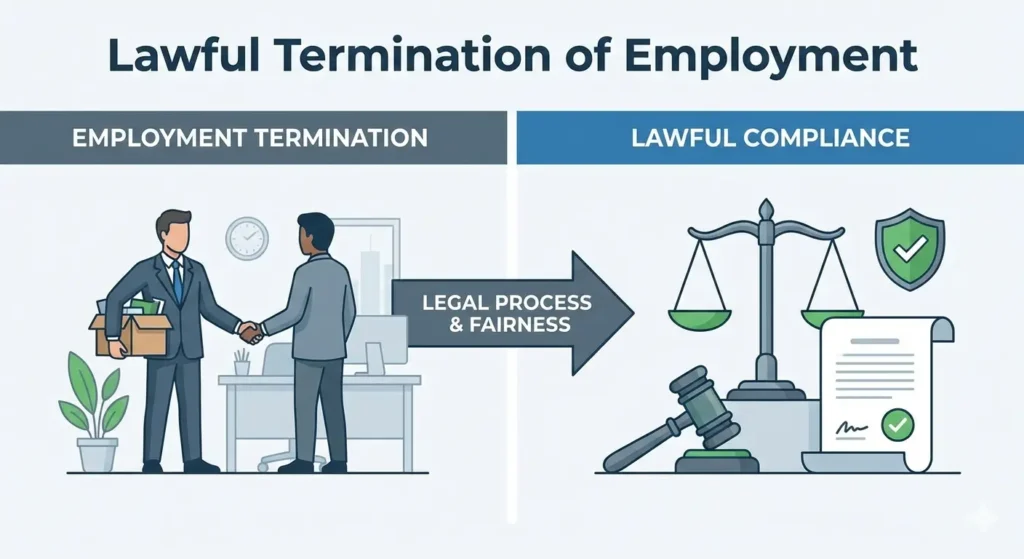
Understanding lawful termination and legal compliance in employment
Employers may terminate employees for justified reasons, including misconduct or redundancy. Notice must be served according to contract terms, and settlements must be completed properly. Following correct procedures avoids legal challenges.
Employee Resignation
Employees also have responsibilities when resigning. Notice periods, final settlements, and visa cancellations must be followed carefully. Missing these steps can lead to disputes or visa complications.
End of Service and Gratuity

End of service and gratuity process in a professional setting
End-of-service benefits are one of the most important protections under JAFZA Labour Laws and Regulations. These benefits reward long-term service and help employees transition after leaving a job. Many workers only think about gratuity at the end, but understanding it early prevents loss and disputes later.
Gratuity rights apply whether employment ends through resignation or termination, as long as legal conditions are met. Employers must calculate and pay these benefits at the time of final settlement, not months later.
Gratuity Eligibility and Calculation

Calculation gratuity eligibility with a team of professional
An employee becomes eligible for gratuity after completing one full year of continuous service. Gratuity is calculated based on the employee’s basic salary only, excluding allowances such as housing or transport. The calculation follows UAE federal labour law, which JAFZA enforces without modification.
Under JAFZA Labour Laws and Regulations termination benefits, the amount increases with years of service. Accurate records of joining date, basic salary, and service continuity are essential. Even small errors in calculation can lead to underpayment and legal claims.
Common Disputes
Most gratuity disputes arise due to incorrect salary bases, missing service periods, or early contract termination misunderstandings. Employees often assume allowances are included, while employers sometimes misinterpret contract terms.
These disputes are handled by the JAFZA labour dispute department, which reviews contracts, payroll records, and service history. Clear contracts and transparent payroll practices remain the best way to avoid conflict and ensure smooth final settlements for both sides.
Complaints and Dispute Resolution
Even with clear contracts and good intentions, workplace disputes can still happen. That is why JAFZA Labour Laws and Regulations provide a structured and fair dispute resolution system. This system focuses on solving problems quickly while protecting the legal rights of both employees and employers, without unnecessary escalation.
The goal is not punishment. It is resolution. Most cases are settled through mediation when the correct process is followed and proper evidence is provided.
Filing Complaints
Employees who believe their rights have been violated can file a formal complaint through JAFZA’s labour affairs channel. Common issues include unpaid salaries, wrongful termination, gratuity disputes, and notice period violations. Supporting documents such as employment contracts, salary slips, and official correspondence play a critical role.
Following the correct JAFZA labour laws complaints process improves outcomes significantly. Complaints that are clear, factual, and supported by records are resolved faster and with fewer complications.
Role of the Dispute Department
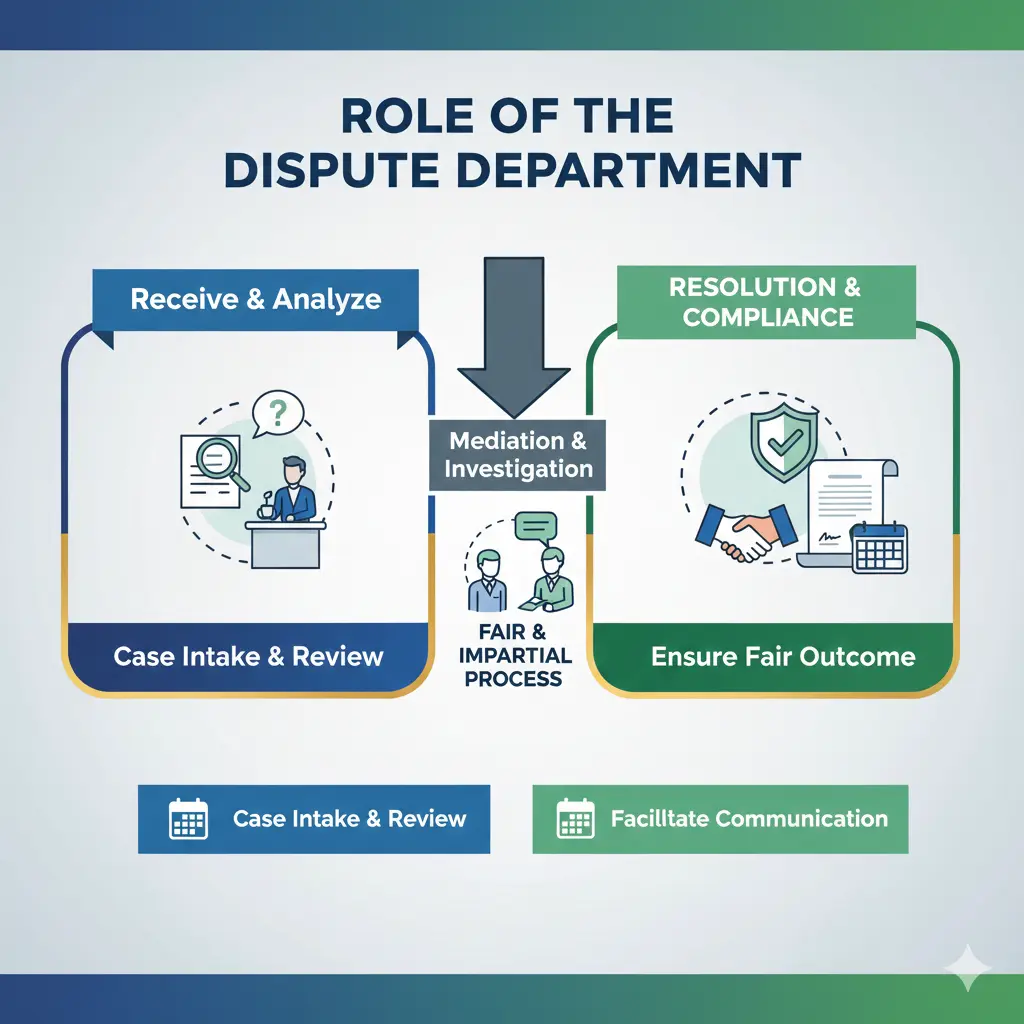
The dispute department role
The JAFZA labour dispute department acts as a neutral authority. Its first priority is mediation, encouraging both parties to reach a lawful settlement without court involvement. This approach saves time, protects professional relationships, and reduces legal costs.
If settlement fails, the department escalates the matter according to UAE labour law procedures. By applying federal standards within the JAFZA system, the department ensures decisions remain fair, enforceable, and legally sound.
Latest Updates and Amendments 2026
Key Changes
Recent updates in 2026 clarify contracts, working hours, and dispute resolution processes. JAFZA Labour Laws and Regulations latest update ensures alignment with modern business practices and international standards.
Why Updates Matter
Staying informed helps employees understand their rights and helps employers reduce legal risks. Ignorance of the law is no longer an acceptable excuse under compliance audits or dispute resolution.
Conclusion
Understanding JAFZA Labour Laws and Relations is not only about knowing rules on paper. It is about protecting your income, your visa status, and your professional future inside the Jebel Ali Free Zone. Many disputes happen simply because employees or employers do not know their legal position. When you understand your contract, working hours, notice period, and end-of-service rights, you avoid costly mistakes.
If you work in JAFZA, always read your employment contract carefully, keep copies of salary records, and follow the proper complaint channels when issues arise. If you run a business, follow labour compliance strictly and document every decision. Laws may evolve, but informed people stay protected. Knowledge of JAFZA Labour Laws and Relations gives you confidence, security, and control over your employment journey in the UAE.